Dental Supplies
Description
-
Profile, introduction, photo, standard, history, tips and notes of dental supplies are presented on this page.
Profile
-
Dental equipment refers to all tools used in examination, treatment, removal, restoring and other manipulating related with any oral diseases.
Dental supplies, dental instruments, dental device or dental material actually refers to the same products in this field.
It is called '牙科器材' in Chinese, 'Dentalbedarf' in Germany, 'Fournitures dentaires' in french and 'Tandheelkundige benodigdheden' in Netherlands.
Dental instruments are essential equipment for doctors to perform oral examination or treatment.
Small dental instruments(such as dental Handpiece, dental kit ), dental consumables and large-scale dental equipment(Dental Chair) work together constitute the backbone of the dental industry.
Photo
-
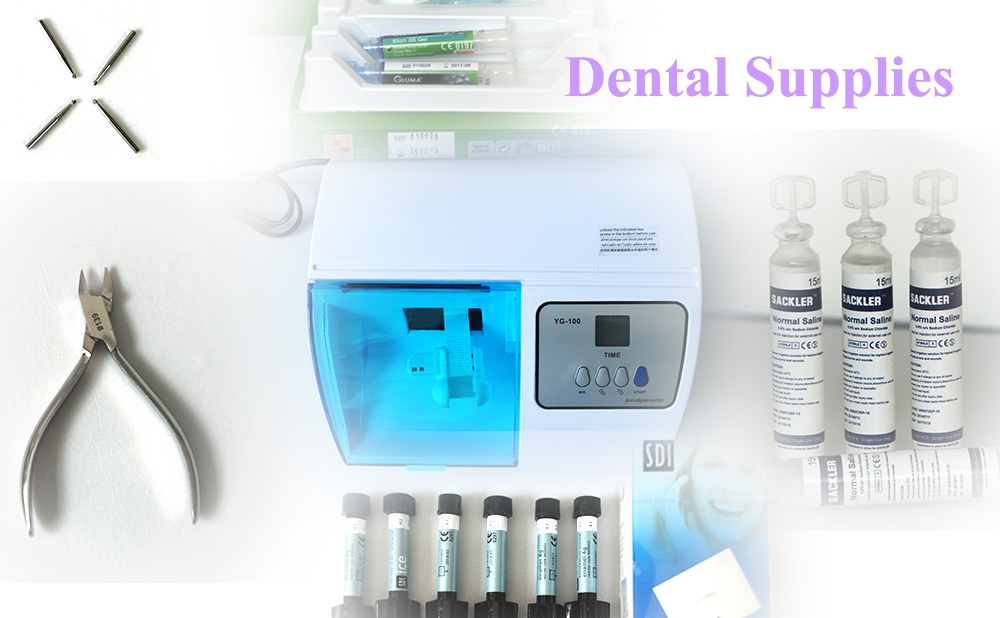
-
Dental supplies covers dental instruments and consumable material
Introduction
-
As per the Disease Control and Prevention Center(CDC), 84.9% of children from 2-17 years of age, 64.0% of adults from 18 to 64 years of age, and 65.6% of adults aged 65 and above have had at least one visit to a dentist in 2017.
According to report of FDI World Dental Federation, oral diseases impact 3.9 billion people of the world. It means half populations of the world needs dental treatment. Tooth decay (dental caries) is the most prevalent of all the 291 conditions included in the global burden of disease study.
The general dental procedures covers dental fillings, bonding, root canals, crowns, bridges, periodontal treatments, and oral maxillofacial procedures.
The existing and potential dental procedures all needs support by dental supplies or dental equipment.
Above data shows a great potential market of dental supplies.
According to the latest research report by StraitsResearch, the global dental supplies market sales is expected on course to a eye-catching growth in the future 10 years.
Details
-
When a patient visit a dentist, the dental doctor will look at the throat, tongue, mouth, and gums to look for loose teeth, gum disease, broken teeth, biting problem or tooth decay. X-ray machine, dental chair, dental kit and dental consumables are often be used directly or indirectly.
The global dental equipment market size was valued at USD 5.4 billion in 2020 and is expected to expand at a compound annual growth rate (CAGR) of 12.1% from 2021 to 2028.
The growth of the dental supplies market is attributed by the factors include the rapid growth of aging population, increasing demand for cosmetic dentistry, and growing incidence of dental caries and other periodontal diseases.
The global dental supplies market covers the following area: North America (United States, Canada, and Mexico), Europe (Germany, France, UK, Russia, and Italy), Asia-Pacific (China, Japan, Korea, India, and Southeast Asia), South America (Brazil, Argentina, and Colombia), Middle East and Africa (Saudi Arabia, UAE, Egypt, Nigeria, and South Africa).
General Products of Dental Supplies
-
The following instruments are used in a general dental examination and treatment:
- Dental hand-piece: It is designed to clean teeth and grind decayed teeth. It can be divided into high-speed machine and low-speed machine according to the speed.
- Oral sterilizer: Equipped microcomputer control system, sterilization is achieved by the thermal and non-thermal effects by a special light source. Most products are composed of water tank, sterilization room, heat insulation layer, door body, piping system, control system and outer cover.
- Oral Camera: Most products are portable WiFi Oral Camera to get a better image of tooth.
- Dental Oil Free Air Compressor: The compressor is optionally equipped with a dryer to meet ideal working gas source requirements for dental equipment.
- Mirrors: It was used in to look at the invisible tooth, or the tooth difficulty to be watched. It is also helpful to reflect lights in mouth.
- Probes: Include a straight probe, perodental probe and dental explorer.
- Retractors: include lip retractor, tongue retractor, check retractor, dental mirror and mouth prop.
Other dental supplies covers various irrigation dental needle, dental extraction forceps, root canal appliances, etc.
The famous brands in dental instruments fields: 3M, A-Dec, Biolase, Carestream, Danaher, Dentsply Sirona, GC, Patterson Companies, Planmecaand Sirona Dental Systems.
Classification
- Size
- Dental equipment can be divided into large dental equipment and small dental device.
- Large dental equipment can be seen when you step into a dentist’s office. This includes dental implant machine, disinfectant, sterilization machines, teeth whitening machines, X Rays machine, dental air compressors, intraoral camera, dental ultrasonic cleaner, etc.
- Small dental equipment is used to perform specialized dental tasks. This includes laser engraving machine, pulse dosimeter machine, dental accessories, dental air-water syringe, blood pressure monitor, dental air polisher, root canal equipment, dental micro motor, dental curing lights, dental ultrasonic scalar, and dental handpieces.
- Product
- The dental supplies market is broadly divided into dental radiology equipment, dental lasers, systems and parts, dental kit, dental hand piece, dental implant, crown and bridge, dental biomaterial, dental chair and equipment, laboratory machines, hygiene maintenance devices, dental consumable material, etc.
- Using place
- It covers dental equipment used in Hospitals and dental device used in Clinics.
Standard
-
The following dental products standards technical specifications comes from ADA (American Dental Association):
ANSI/ADA Standard No. 1094 for Quality Assurance for Digital Intra-Oral Radiographic Systems
ANSI/ADA Standard No. 182 — Dentistry — Bonding Test Between Polymer Teeth and Denture Base Materials: 2021
ANSI/ADA Standard No. 28—Dentistry—Endodontic Instruments—Shaping and Cleaning Instruments: 2021
ANSI/ADA/AAMI Standard ST-40—Table-Top Dry Heat (Heated Air) Sterilization and Sterility Assurance in Health Care Facilities: 2004 (Reaffirmed 2021)
ANSI/ADA Standard No. 47-1—Dentistry—Stationary Dental Units and Patient Chairs – Part 1: General Requirements: 2021
ANSI/ADA Standard No. 47-2—Dentistry—Stationary Dental Units and Patient Chairs – Part 2: Air, Water, Suction and Wastewater Systems: 2021
ANSI ADA AAMI Standard ST-55—Table-top Steam Sterilizers: 2004 (Reaffirmed 2021)
ANSI/ADA Standard No. 15—Dentistry—Artificial Teeth for Dental Prostheses: 2021
ANSI/ADA Standard No. 33—Dentistry—Vocabulary: 2021
ANSI/ADA Standard No. 25—Dentistry—Gypsum Products: 2015 (Reaffirmed 2021)
ANSI/ADA Standard No. 57—Dentistry—Endodontic Sealing Materials: 2021
ANSI/ADA Standard No. 94—Dentistry—Central Compressed Air Source Equipment: 2021
ANSI/ADA Standard No. 101—Dentistry—Endodontic Instruments—General Requirements: 2021
ANSI/ADA Standard No. 105—Dentistry—Elastomeric Auxiliaries for Use in Orthodontics: 2021
ANSI/ADA Standard No. 117—Dentistry—Fluoride Varnishes: 2021
ANSI/ADA Standard No. 119—Dentistry—Manual Toothbrushes: 2021
ANSI/ADA Standard No. 120—Dentistry—Physical Properties of Powered Toothbrushes: 2021
ANSI/ADA Standard No. 75—Soft Lining Materials for Removable Dentures—Part 1: Short-Term Materials: 2020
ANSI/ADA Standard No. 78—Dental Obturating Cones: 2013 (Reaffirmed 2020)
ANSI/ADA Standard No. 80—Dental Materials - Determination of Color Stability: 2001 (Reaffirmed 2020)
ANSI/ADA Standard No. 183 — Reprocessable Cartridge Syringes for Intraligamentary Injections: 2020
ANSI/ADA Standard No. 184 — Laser Welding and Filler Materials in Dentistry: 2020
ANSI/ADA Standard No. 185 — Integrated Dental Floss and Handles: 2020
ANSI/ADA Standard No. 190 — Single-Use Dental Cartridges for Local Anesthetics: 2020
ANSI/ADA Standard No. 191 — Intra-Oral Mirrors: 2020
ADA Technical Report No. 133—Guide to Dental Lasers and Related Light-Based Technologies: Technology, Science and Safety Considerations: 2020
ANSI/ADA Standard No. 192 — Dental Explorer: 2020
ANSI/ADA Standard No. 145—Interoperability of CAD/CAM Systems in Dentistry: 2020
ANSI/ADA Standard No. 48—Curing Lights (Powererd Polymerization Activators): 2020
ANSI/ADA Standard No. 53—Polymer-Based Crown and Bridge Materials: 2020
ANSI/ADA Standard No. 37—Dental Abrasive Powders: 1986 (Reaffirmed 2020)
ANSI/ADA Standard No. 38—Dentistry—Compatibility testing for metal-ceramic and ceramic-ceramic systems: 2020
ANSI/ADA Standard No. 39—Pit and Fissure Sealants: 2020
ANSI/ADA Standard No. 41—Evaluation of Biocompatibility of Medical Devices Used in Dentistry: 2020
ANSI/ADA Standard No. 43—Mixing Machines for Dental Amalgam: 2020
ANSI/ADA Standard No. 157—Powered Dental Scaler Handpieces and Tips: 2020
ANSI/ADA Standard No. 158—Coupling Dimensions for Handpiece Connectors: 2020
ANSI/ADA Standard No. 62—Dental Abrasive Pastes: 2005 (Reaffirmed 2020)
ANSI/ADA Standard No. 63—Endodontic Instruments—Auxiliary: 2020
ANSI/ADA Standard No. 69—Dental Ceramic: 2020
ANSI/ADA Standard No. 95—Endodontic Instruments—Enlargers: 2020
ANSI/ADA Standard No. 96—Dental Water-based Cements: 2020
ANSI/ADA Standard No. 100—Dentistry—Orthodontic Brackets and Tubes: 2020
ANSI/ADA Standard No. 73—Dental Absorbent Points: 2008 (Reaffirmed 2020)
ANSI/ADA Standard No. 97—Corrosion Test Methods for Metallic Materials: 2020
ANSI/ADA Standard No. 116—Oral Rinses: 2020
ANSI/ADA Standard No. 135—Denture Adhesives: 2015 (Reaffirmed 2020)
ANSI/ADA Standard No. 136—Products for External Tooth Bleaching: 2015 (Reaffirmed 2020)
ANSI/ADA Standard No. 139—Dental Base Polymers: 2020
ANSI/ADA Standard No. 130—Dentifrices-Requirements, Test Methods and Marking: 2020
ANSI/ADA Standard No. 131—Dental CAD/CAM Machinable Zirconia Blanks: 2015 (Reaffirmed 2020)
ANSI/ADA Standard No. 160—Soft Lining Materials for Removable Dentures – Materials For Long-Term Use: 2020
ADA Technical Report No. 168—Guidance on Method Development and Validation of Cleaning Processes for Dental Instruments: 2020
ANSI/ADA Standard No. 177 — Central Suction Source Equipment: 2020
ANSI/ADA Standard No. 179 — Shanks for Rotary and Oscillating Instruments: 2020
ANSI/ADA Standard No. 151—Screening Method for Erosion Potential of Oral Rinses on Dental Hard Tissues: 2015 (Reaffirmed 2020)
ANSI/ADA Standard No. 167—Test Methods for Dental Unit Waterline Biofilm Treatment: 2020
ANSI/ADA Standard No. 169 — Periodontal Probes: General Requirements: 2019
ANSI/ADA Standard No. 170 — Periodontal Probes — Dental Excavators — Discoid Type: General Requirements: 2019
ANSI/ADA Standard No. 171 — Analysis of Fluoride Concentration in Aqueous Solutions by Use of Fluoride Ion-Selective Electrode: 2019
ANSI/ADA Standard No. 172 — Minimal Dental Implant Data Set for Clinical Use: 2019
ANSI/ADA Standard No. 173 — Designation System for Dental Implants: 2019
ANSI/ADA Standard No. 178 — Orthodontic Anchor Screws: 2019
ANSI/ADA Standard No. 111—Adhesion Test Methods to Tooth Structure: 2019
ANSI/ADA Standard No. 88—Dental Brazing Alloys: 2019
ADA Technical Specification No. 150—Method for Determination of Polymerization Shrinkage Stress of Polymer-Based Restorative Materials: 2019
ANSI/ADA Standard No. 122—Dental Casting and Baseplate Waxes: 2007 (Reaffirmed 2019)
ANSI/ADA Standard No. 125—Manual Interdental Brushes: 2018
ANSI/ADA Standard No. 126—Casting Investments and Refractory Die Materials: 2018
ANSI/ADA Standard No. 141—Dental Duplicating Material: 2013 (Reaffirmed 2018)
ANSI/ADA Standard No. 127—Dynamic Loading Test for Endosseous Dental Implants: 2018
ANSI/ADA Standard No. 161—Guidance on Color Measurement in Dentistry: 2018
ANSI/ADA Standard No. 164— Dental Furnace, Part 2: Test Method for Evaluation of Furnace Program via Firing Glaze: 2018
ANSI/ADA Standard No.159—Coiled Springs for Use in Orthodontics: 2018
ANSI/ADA Standard No. 134—Metallic Materials for Fixed and Removable Restorations and Appliances: 2018
ANSI/ADA Standard No. 144—Alloy for Dental Amalgam: 2018
ANSI/ADA Standard No. 163— Dental Furnace Test Method for Temperature Measurement with Seperate Thermocouple: 2018
ANSI/ADA Standard No. 146—CAD/CAM Abutments in Dentistry: 2018
ANSI/ADA Standard No. 109—Procedures for Storing Dental Amalgam Waste and Requirements for Amalgam Waste Storage/Shipment Containers: 2006 (Reaffirmed 2018)
ANSI/ADA Standard No. 30—Dental Zinc Oxide - Eugenol and Zinc Oxide - Non-Eugenol Cements: 2013 (Reaffirmed 2018)
ANSI/ADA Standard No. 32—Orthodontic Wires: 2017
ANSI/ADA Standard No. 89—Dental Operating Lights: 2017
ANSI/ADA Standard No. 19—Elastomeric Impression Materials: 2017
ANSI/ADA Standard No. 27—Polymer-based Restorative Materials: 2016
ANSI/ADA Standard No. 132—Scanning Accuracy of Dental Chairside and Laboratory CAD/CAM Systems: 2015
ANSI ADA Standard No. 128 Hydrocolloid Impression Materials 2015
ANSI/ADA Standard No. 74—Dental Operator's Stool: 2010 (Reaffirmed 2015)
ANSI/ADA Standard No. 113—Periodontal Curettes, Dental Scalers and Excavators: 2015
ANSI/ADA Standard No. 54—Double-Pointed, Parenteral, Single Use Needles for Dentistry: 1986 (Reaffirmed 2014)
ANSI/ADA Standard No. 87—Dental Impression Trays: 1995 (Reaffirmed 2014)
ANSI/ADA Standard No. 71—Root Canal Filling Condensers (Pluggers and Spreaders): 2008 (Reaffirmed 2013)
ANSI/ADA Standard No. 99—Athletic Mouth Protectors and Materials: 2001 (Reaffirmed 2013)
ANSI/ADA Standard No. 34—Dental Cartridge Syringes: 2013
ANSI/ADA Standard No. 108:2009—Addendum: 2011
ANSI/ADA Standard No. 108—Amalgam Separators: 2009
ADA Standard No. 26—Dental X-Ray Equipment: 1991
ADA Standard No. 44—Dental Electrosurgical Equipment: 1979
History
-
A specialist doctor was fist appointed in ancient Egyptians before 2900 BC.
Greek doctor Esculapius fist considerred removing corroded teeth under the help of dental device in 1300 B.C..
In 460-377 B.C., Hebercrotty recommended cleaning teeth with woolen honey and then gargling with a mixture of radish, octagonal, undruged and white wine. He also completed the fist reference of pliers, the oldest dental tool used for tooth extraction.
During the Roman Empire, the upper classes of Rome paid great attention to oral hygiene; toothpicks were widely used.
In the 11th century, Arab doctor Albucasis first described his invention of a tool to remove toothstone. It wasn't until the 19th century that most dentists made their own tools.
In the 17th century, toothbrushes were an expensive new type of household item in Britain.
The world's first industrial toothbrush was first invented in London prison in 1780 by William Ellis, an English leathersmith.
In 1756, Phillip invented the first HE frame prototype "Gypsum HE frame", which began the development of he frame.
In 1790, John Greenwood modified a spinning wheel to create a dental drill powered by feet. J.J.J. Serre in Vienna introduced a screwdriver to remove dental residue; the technology was introduced to the United States 50 years later.
In 1792 DeChemat obtained the porcelain tooth making method.
In 1797, Baltimore M.D. Thomas Bruff applied for the first patent for An American dental device, which he called a "vertical tooth puller".
In 1815, Levi Spear Parmly of New Orieans, La. used silk floss to clean the adjacent teeth.
In 1818, Auguste Taveau in Paris produced the first silver-mercury filling material.
In the early 1840s, John D. Chevalier of New York began producing dental equipment and established the first dental equipment supply company.
In 1844, M.L. Rein recommended regular oral hygiene maintenance using toothbrushes and floss. Ether and chloroform were also used for dental anesthesia in the following years.
In 1846, hand-powered tooth drills were first used to treat caries.
In 1864, George Fellows Harrington of England patented the first motor-driven tooth drill.
In 1865, the first steam sterilization equipment was invented.
The first electric motor was invented for tooth drill in 1870.
Joint-wing X-ray film was first used in 1926.
In 1940, the first compressed air-driven tooth drill was patented.
In 1955, Michael Buonocore invented the white composite resin white filling material.
In the 1940s and 1950s, iron dental carts were used clinically and gradually developed into today's dental treatment chairs.
In 1960, hydrocate was created.
In 1963, R, L, bowen patented dental compound resins and developed adhesives.
In 1970, electric toothbrushes entered the U.S. market.
1971, American scholars developed glass-ion watergate.
1978 hydroxyapatite and other biological ceramic implant materials was created.
In 1978, Apotheker and Dr. Jako first used microscopes for dental treatment.
1979, MS.Strong began the application of lasers in oral field.
1987, the world's first denture repair CAD/CAM system applied to oral repair clinical.
1998, the first commercial CBCT machine (NewTom 9000) developed and produced by Italian engineers.
2003 zirconia products appeared and applied to oral clinical.
Note
-
Don't put too much force on the dental device.
Dental instrument operators should avoid sudden direction changes of motion, smooth and gentle is the most effective.
Do not press the edges against the gums when using the mouthpiece to avoid pain or discomfort to the patient.
The working end of the probe should be close to the surface and checked along the edge of the gum to prevent the working end of the sharpener from stabbing the gums.
Tips
-
Find a reliable dental equipment suppliers at reasonable price is important for hospital or clinic.
Most dental equipment suppliers offers sample before a large purchasing.
Staff needs enough training before the dental device usage.
Read dental equipment guidelines by manufactures before the fist using.
All dental devices should be clean and disinfected regally, especiall after the using.
It is important to check equipment regularly. Damaged equipment should be replaced in time.
Wear masks and gloves during dental treatment, because silver-mercury alloy can enter the human body through the skin and respiratory tract.
- Connect buyers with suppliers.
- Home | Copywright @ SupplierV.com