Toy
Description
-
profile, introduction, photo, certification, benefits, history, tips and notes are presented on this page.
Profile
-
Also called plaything, toy refers to something for an infant or child to play with.
Toy is called 'Spielzeug' in German, 'speelgoed-' in Holland, '玩具' in China, and 'ludilo' in Global language.
Being a thing to amuse oneself, Toy can be created in a shape of human, animal, or any other instrument to be used in a game.
Developed following the history of human being, Toy is associated with a long history and a great variety of cultures. Toy can be a simple stick or round stone on the road; and also can be a very complexed mechanical devices.
Photo
-
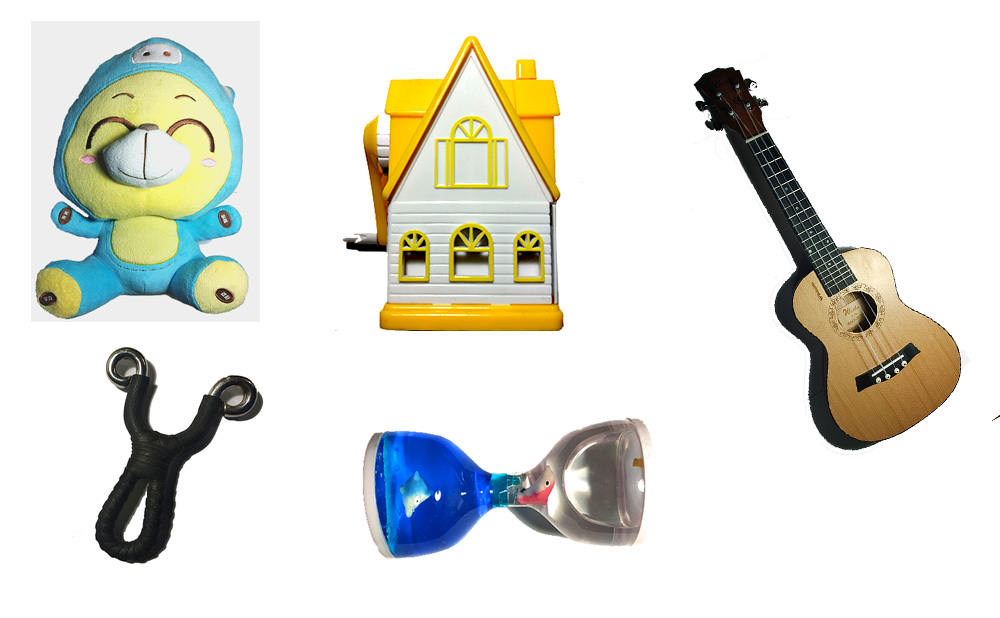
-
Several kinds of toy are presented in the photo.
Introduction
-
Toys, in a narrow sense refer to plaything only for child. Toys should be understood in a more broad sense. Toys, in a broad sense, refer to items or objects that can be used for playing by anybody, such as infant, child, young people, adults and even elder people.
Toys can be natural objects, that is, non-artificial things such as sand, stones, mud, branches, etc. They are not limited to things sold in market. Things that you hear, listen to, and touch can all be called toys.
Toys are suitable for children, and more suitable for young people and middle-aged and even elderly people. It is a tool to open the smart skylight and make people smart and smart.
Playing with toys is often used as an entertaining and educational way in human society.
Most toys owns three basic characteristics: entertainment, education, and safety.
Certification and Standards
- Children’s Product Certificate (CPC)
- Manufacturers and importers of children’s products must certify, in a written Children’s Product Certificate (CPC) based on test results from a CPSC-accepted laboratory, that their children’s products comply with applicable children’s product safety rules.
- International Toy Safety Standards
- 'International Toy Safety Standards' was established by the International Toy Industry Council .
Due to unsafe factors in certain toys, toy safety standards were established and accepted by many countries in the world.
No toys are permitted to be produced, sold or imported unless they meet the standards.
- The Toy Association
- Founded in 1916, The Toy Association™, Inc. is the not-for-profit trade association representing all businesses that design, produce, license, and deliver toys and youth entertainment products for kids of all ages.
Standard of Toy
- International Standardization
- ISO 8124-1: 2000 Toy Safety-Part 1: Safety requirements related to mechanical and physical properties
- ISO 8124-2: 1994 Toy Safety-Part 2: Flame Retardant Test
- ISO 8124-3: 1997 Toy Safety-Part 3: Transfer of Certain Elements
- ISO 8098: 1989 + Amdt 1: 1992 Safety requirements for children's bicycles
- America
- CPSC 16CFR Part1000 to End Federal Consumer Product Safety Act
- ASTM F963-96a Toy Safety
- ANSI Z315.1-1996 Safety Requirements for Tricycles
- ANSI/UL 696 Electric Toy Safety
- China
- GB 6675-2003 Toy Safety Requirements
- GB/T 9832-93 Quality and safety of plush and cloth toys
- GB 5296.5-2006 Marking and Instructions for Toys
- GB 14746-93 Safety requirements for children's bicycles
- GB 14747-2006 Safety requirements for children's tricycles
- GB 14748-93 Safety requirements for strollers
- GB 14749-93 Safety requirements for baby walkers
- GB 13472-92 BMX safety requirements for children's bicycles
- Europe
- New Toy Safety Directive 2009/48/EC
- EN71 Part 1 mechanical and physical performance test
- EN71 Part 2 Flammability Test
- EN71 Part 3 8 kinds of toxic metal element content test
- EN71 Part 4 Chemical Experiment Toys
- EN71 Part 5 Non-experimental chemical toys
- EN71 Part 6 Graphical Symbols for Age Group Warning Labels
- EN71 Part 7 finger paint
- EN71 Part 9 General Requirements for Organic Compounds
- EN71 Part 10 sample preparation and extraction
- EN71 Part 11 Organic Compound Analysis Method Toy Safety Directive 88/378/EEC
- EN62115 Additional test standard for electric toys. This standard includes all electric toys and also applies to Electric Construction Sets.
- Canada
- C.R.C.,c.931 Dangerous Products (Toys) Act
- New Zealand
- NZS 5820: 1982+Amendment No.1+COPR1 toy safety requirements
- NZS 5822: 1992 Prevention of swallowing and choking hazards when children under 3 years old use toys
- South Africa
- SABS ISO 8124-2: 2000 Toy Safety-Part 2: Flame Retardant
- SABS ISO 8124-3: 2000 Toy Safety-Part 3: Transfer of Certain Elements
- Malaysia
- MS EN71 Part1:1995 Toy Safety-Part 1: Physical and Mechanical Properties
- MS ISO8124-2: 1999 Toy Safety-Part 2: Flame Retardant Performance
- MS EN71 Part3: 1998 Toy Safety-Part 3: Transfer of Certain Elements
- MS EN71 Part4: 1998 Toy Safety-Part 4: Test Equipment for Chemistry and Related Activities
- MS EN71 Part5: 1998 Toy Safety-Part 5: Chemical Toys (except test devices)
- Saudi Arabia
- SSA 765-1994 Playground equipment: Part 1: General safety requirements
- SSA 1063-1994 Toys and general safety requirements
- SSA 1064-1995 Test Method Part 1: Mechanical and Chemical Test
- SSA 1065-1995 Test Method Part 2: Flame Retardant
- SSA 1322-1997 low power radio frequency device
- Singapore
- SS 474 PT.1: 2000 Toy Safety-Part 1: Physical and Mechanical Properties
- SS 474 PT.2: 2000 Toy Safety-Part 2: Flame Retardant Performance
- SS 474 PT.3: 2000 Toy Safety-Part 3: Transfer of Certain Elements
- SS 474 PT.4: 2000 Safety of toys-Part 4: Test devices for chemistry and related activities
- SS 474 PT.5: 2000 Safety of Toys-Part 5: Chemical Toys (Except Test Equipment)
- SS 474 PT.6: 2000 Safety of toys-Part 6: Graphical representation of age signs
- Thailand
- TIS 685-2540 Part1: 1997 Toy Safety-Part 1: General Requirements
- TIS 685-2540 Part2: 1997 Toy Safety-Part 2: Packaging and Labeling
- TIS 685-2540 Part3: 1997 Toy Safety-Part 3: Test Methods and Analysis
Benefits
-
- Bring fun and enjoyment to kids.
- Improve the learning skills of child.
- Enhances Development of the senses of kids.
- Helps in Boosting childrens' IQ.
- Toys lead the child to think and act, which nurturing their creativity and imagination.
- Improve the ability of problem solving.
- Help child to learn how to play with other kids through compromise, conflict resolution and sharing, which enhanced emotional and social ability.
- Discovering their independence and positive self-esteem.
- Improve concentration.
- Improve athletic ability and balance ability, for example, the scooter or Balance scooter.
Disadvantages
-
- Poorly-made Plastic or weed toys can be extremely dangerous to children because of the Sharp parts.
- Not environmentally friendly: Most plastic toys still do not degrade easily and are not recyclable as well.
- A lot of toys can shorten a child’s attention span.
- Having too many toys make make child less excited when they got toy, it even leads to a spoiled children.
Toy Related Events
-
- 1899 Brooklyn Children's Museum was built in the United States - which is the first children's museum in the world.
- 1949 Ole Christiansen, invents Lego bricks.
- 1959 Barbie is created by Ruth Handler, and is named after her daughter Barbara.
- 1977 Skateboards is getting popular.
- 1985 Transformers, robots in disguise, delighted children. They can transformed from vehicle to robot and back.
- In 2004, the first children’s museum in China was built in the Second Children’s Palace in Zhujiang New Town, Guangzhou.
Toy Types
- Jigsaw toys
- Improve children's cognitive ability, analytical ability, imagination, and cultivate children's sense of accomplishment.
- Action figures
- Some action figures come directly from the superhero of movie
- Game toys
- On the basis of improving children's cognitive abilities, exercise the ability of using hands and brain, develop their thinking, exercise operational skills, as well as the coordination of hand and eye.
- Digital abacus and text type
- Inspire children to accurately understand shapes, numbers, and quantities, and then exercise muscle flexibility.
- Toy Tools
- Understand and master the shape, color and structure of various tools, exercise the ability of using hands and brain, make eye and hands work together, develop imagination.
- Puzzle Combinations
- Cultivate spatial imagination ability and manipulative ability, get a deep understanding of time, animals, vehicles, and house shapes and colors.
- Building blocks
- Stimulate children's manipulative ability, cultivate children's understanding of reasonable combination and spatial imagination;
- Traffic toys
- It covers cars, trucks, helicopters, airplanes, boats, motorcycles, emergency cars, construction vehicles and even robots are loved by kikds. Improve children’s cognition and understanding of the structure of vehicle, such as trains, cars and various engineering vehicles; find the ability to assemble, drag and organize; improve their manipulative ability, operational abilities in daily life.
- Drag Type
- Improve children's cognitive ability, help kids to find the different characteristics of various animals, exercise their ability to walk in a wide range.
- Board Games
- Great toy for kids of any age, even adult.
- Dolls
- Covers baby dolls, collectible dolls, dolls patterned after movie princesses. Dolls are one of the best toy to accompany the kids, especially when parents are not in home.
Note
-
- Give up too noisy toys.
- Pay attention to cords longer than 30 cm on toy.
- Check for sharp edges on the toy before you pay.
- Small parts or components is easy to be swallowed by children.
- Kids' finger is easy to be inched by narrow pores on toys.
- Adults should not play children's mouth-blowing toys, to avoid spreading germs to children.
- Do not let baby to run with hard fragile toys in his mouth to avoid oropharyngeal injuries or other traumas when falling.
- Teach children how to manage toys on themselves.
- To avoid on’t buy explosive toy for baby, incase to hurt your baby when it explodes.
Tips
-
- Parents should buy safe, non-toxic, not easily broken, no-sharp-edges, and washable toys for children.
- Parents are suggested to accompany infant when they play toy.
- Consider whether the toy is fall-resistant, chewy, washable, etc.
- Washable toys needs to be washed frequently.
- Parents should often check the toys for damage.
- Connect buyers with suppliers.
- Home | Copywright @ SupplierV.com