Face Mask
Description
-
Profile, introduction, application, details, photo, advantage, disadvantage, classification, tips and notes of Face Mask are presented on this page.
Profile
-
Face mask is loose-fitting mask to cover the nose and mouth for protection, disguise, entertainment or ritual practices.
Most masks have ear loops or ties at the back of the head.
Face Mask is also called Facial Mask; it is 'Masque facial' in French, '口罩' in Chinese, 'قناع وجه' in Arab, 'Schutzmaske' in Germany, 'gezichtsmasker' in Netherlands and 'маска для лица' in Russia.
Generally made of gauze, non-woven fabric or paper, Face Mask is used to filter the incoming air to block harmful gases, odors, droplets, viruses and other substances.
Photo
-
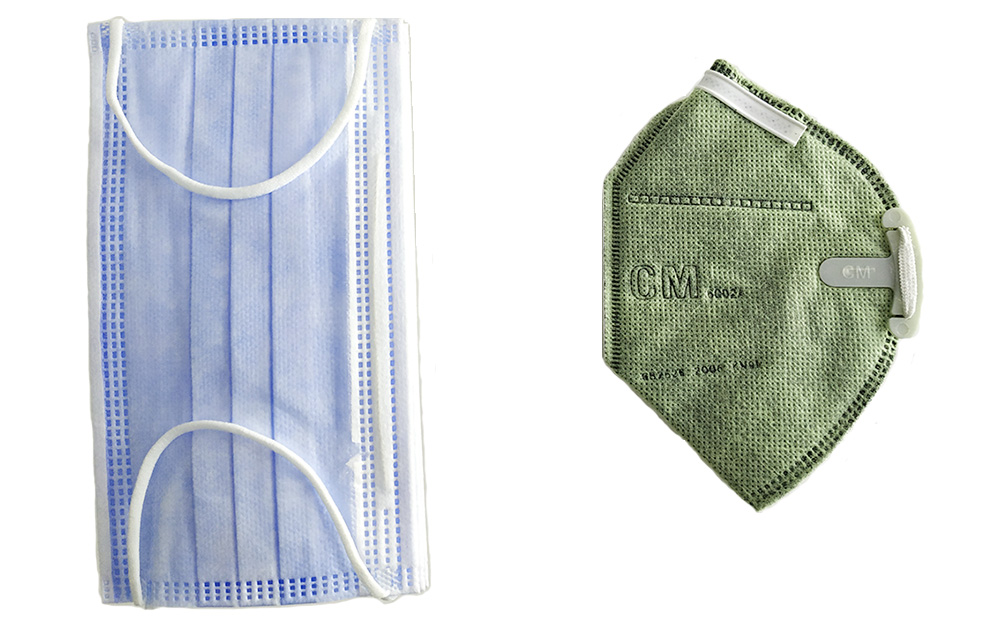
-
Several kinds of face mask are included in the photo.
Introduction
-
Face Mask is very helpful when respiratory infectious diseases prevalent or working in polluted environments, because the mask filter the air before it enter lungs.
To prevent dust or breath, people in ancient Chinese palace began to cover their mouth and nose with silk scarves, which is seemed as the earliest facial mask.
Mask offers great help and production in many industries and fields, especially in hospital and factory. And it is must item in controlling the COVID since 2019.
Face Masks can be divided into air filter masks and air supply masks. The popular face mask covers Cotton mask, dust mask, Medical surgical mask and N95 mask.
Details
-
Face mask is a tool to prevent the spread of disease.
You are suggested to wear a face mask when you are sick with a cough or sneezing illness (with or without fever). The face mask will help protect the people are you from catching your illness.
COVID has rapidly affected our life since the end of 2019. Wearing a protective face mask has become a must in life or work. Many public service providers ask customers to wear face masks correctly to avail of their services.
Face mask is available in different brands and colors. And it can be tailored to in different style and pattern.
Generally speaking, disposable medical masks and medical surgical masks are limited to one-time use, and the cumulative use should not exceed 8 hours;
When you wear a mask, it should be over your nose and mouth.
The mask should be replaced in time if the mask is damaged or contaminated.
Common mask standards: N95 : N95, EN149, KN95.
Application of Face Mask
- Surgery
- Doctors wear Surgical mask during surgery to filter the air. It can prevent the odors or droplets to enter the nose or mouth of doctor; at the same time it prevent the breath to touch patient.
- Working environment with dust, toxic and harmful gases
- Face mask is must when people work in an environment of dusk, this help to prevent the harm to lung.
Special face mask is needed in an environment with toxic or harmful gases.
- Food processing industry
- As we know, employees in food-related industries should wear masks in food processing and catering operations.
- Patients with respiratory diseases
- Tiny drops may released into the air when the patient talks, coughs, or sneezes. Face mask is helpful to stop the tiny drops and prevent the diseases to be infected to other persons.
- During the epidemic of respiratory diseases
- Face-mask may limit the spread of germs by stop the breath to reach other people. This is an important method to can cut off the infecting path of respiratory diseases. For example, during the COVID of 2020, Face made great help in controlling the disease.
- Service industry
- Face mask is often used in service industry, such as food catering, hotel cleaning staff, restaurant chef, etc.
Details
-
Face mask is a tool to prevent the spread of disease.
You are suggested to wear a face mask when you are sick with a cough or sneezing illness (with or without fever). The face mask will help protect the people are you from catching your illness.
COVID has rapidly affected our life since the end of 2019. Wearing a protective face mask has become a must in life or work. Many public service providers ask customers to wear face masks correctly to avail of their services.
Face mask is available in different brands and colors. And it can be tailored to in different style and pattern.
Generally speaking, disposable medical masks and medical surgical masks are limited to one-time use, and the cumulative use should not exceed 8 hours;
When you wear a mask, it should be over your nose and mouth.
The mask should be replaced in time if the mask is damaged or contaminated.
Common mask standards: N95 : N95, EN149, KN95.
Components of Face Mask
-
A normal face mask covers the following components:
- Face Mask body / cup
- Filter element
- Nose wire
- ear loops / ties
- Exhalation valve
How to Work
-
Face mask use several layers of cloth, paper or non-woven fabric to filter the air to prevent the dust or virus to enter lung. The dust or virus will be filtered and stucked in the gap of the mask material.
Classification of Face Mask
- By Function
- Face covers the following classifications based on their function:
- - Surgical face mask : The face mask include three layers: inner, middle and outer. The inner layer is ordinary sanitary gauze or non-woven fabric, the middle layer is ultra-fine polypropylene fiber meltblown material layer, and the outer layer is non-woven fabric or ultra-thin polypropylene meltblown material. This high-efficiency medical protective mask is highly hydrophobic and breathable, and has a significant filtering effect on small virus-carrying aerosols or harmful dust.
- - Ordinary medical face mask : Ordinary medical masks have lower requirements for filtration efficiency of particles and bacteria. It aims at preventing infections between doctors and patients or medical staff inhaling germs.
- - Powered respirators, such as powered air purifying respirators (PAPRs)
- - Face shields
- - Face mask to keep warm in winter
- - Face masks to limit industrial or general exposure during construction.
- By Raw Material
- - Based on the raw Material, face mask covers :
- - Non-woven Face Mask: It covers a surface layer and a filter layer made of melt-flown non-woven fabric in the middle. Non-woven face mask has strong air permeability, good filtering effect, and sterilization effect.
- - Activated carbon mask : This kind of mask can filter bacteria and viruses, and absorb odor, formaldehyde and slight poisonous gases, which is often used in home decoration.
- Cotton masks : The main function of this kind of mask is keeping warm and it can be reused after washing.
- - Polymer material mask
- - Paper mask: Mainly used in household, cleaning and food industry. This kind of face maek can not filter germ.
- - Sponge masks : Except keep warm, sponge mask can block dust, catkins and other large diameter objects in daily life.
Advantages of Face Mask
-
1. The protecting function of a mask is great.
2. The protection of the mask is double-way; protect wearer from being infected and Keep respiratory droplets of patient from spreading to others
3. Compared with the protecting function, the price is very low.
4. The new style face mask is comfortable to be used.
Disadvantages of Face Mask
-
1. It make breath not so smooth, especially when you exercise.
2. It need some expense although the face mask is not expensive.
Note
-
The two sides of the mask cannot be used interchangeably.
In general, face mask is not need in outdoor.
Baby under 2 years old is not suggested to wear a face mask.
Wash your hands or use hand sanitizer before putting on a mask.
Do not touch it when wearing a face mask.
Only medical surgical masks and N95 masks can prevent infectious diseases.
Wearing face mask may case breathing difficulties and skin sensitivity, especially for people with heart problem or pregnant women.
Tips
-
Face mask should be fit and completely cover your nose and mouth.
Face mask with nose wire is better to fit face and nose to prevent air from leaking out of the top of the mask.
Use a face mask to fit snugly with the sides of your face and don’t have gaps.
Reusable masks should be washed daily.
If you are aged 2 or older, you should wear a mask in indoor public places.
People with beards should trim beards close to the face before wear face mask.
Wash your hands after handling or touching a used mask.
- Connect buyers with suppliers.
- Home | Copywright @ SupplierV.com