Non Woven Fabric
Description
-
Profile introduction classification, advantages, disadvantages, application and notes are presented on this page.
Profile
-
Non-woven fabric, also known as needle-punched cotton, is made of polyester fiber (abbreviated as: PET).
The product processing covers high temperature melting, spin, and hot press, which make the Non-woven fabric available in different thicknesses, feels, textures and Hardness.
Photo
-
-
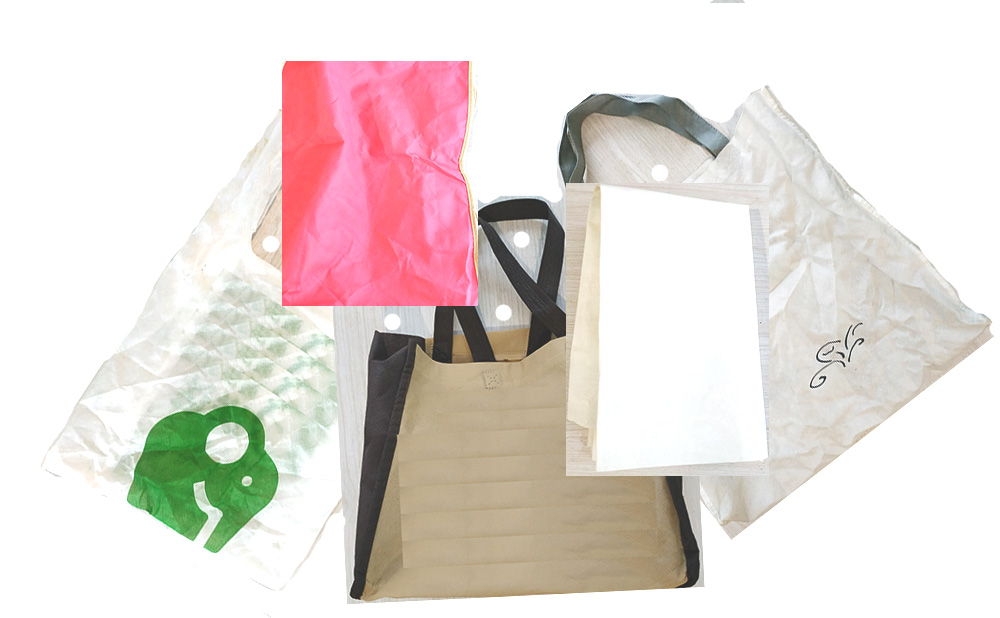
Non-woven-fabric bags and cloth are presented.
Introduction
-
Does not have latitude and longitude lines, Non-woven fabric is easy to be tailored or sewed.
Using polypropylene (PP material) pellet as raw material, Non-woven fabric owns the appearance and certain properties of the cloth.
The features of Non-woven fabric covers moisture-proof, breathable, flexible, thin, flame retardant, non-toxic, low price, recycling, etc. The make this material can be used in different industries, such as sound, insulation, electric sheets, masks, clothing, medical and filling materials.
Some non-woven materials lack sufficient strength unless densified or reinforced by a backing. In recent years, non wovens have become a popular material.
Classification of Non-Woven Fabric
- Spunlacing non-woven fabric
- It was processed by spraying high-pressure thin water into one or more layers of fiber to entangle the fibers with each other.
- Thermally bonded non-woven fabric
- This is a product to the add fibrous or powdery hot-melt adhesive reinforcement materials to the fiber layers. While the fiber is heated, it will be melted and cooled to reinforce the fabric.
- Pulp air-laid non-woven fabric
- Known as dust-free paper dry dry paper-making non-woven fabric, it is made by blowing air into wood fiberboard, which make the board into single fiber on a curtain.
- Wet-laid non-woven fabrics
- Based on opening fiber raw materials in water, the single fibers will be fixed with with other fibers and reinforced into cloth under the help of mechanism.
- Spunbond non-woven fabric
- After the melted polymer was extruded and stretched to form continuous filaments, they will be bonded into non-woven fabric cloth via method of hot, chemical or mechanical.
- Melt-blown non-woven fabric
- Melted polymer blown out before colling down and form into non-woven fabric cloth.
- Needle-punched non-woven fabrics
- Being a kind of dry-laid non-woven fabrics, Needle-punched non-woven fabrics was make by puncturing needles to reinforce the fluffy web into a cloth.
- Hydrophilic non-woven fabric
- Mainly used in medical and sanitary materials, Hydrophilic non-woven fabric can absorb water quickly and offers a better touch felling. It is often used in sanitary napkins and sanitary pads.
Advantages of Non-woven fabric
- Lightweight
- Using Polypropylene resin as the main raw material, the specific gravity of Non-woven Fabric is only 0.9, three-fifths of cotton.
- Softness
- Non-woven Fabric is moderately soft and comfortable.
- Water-repellent
- With zero moisture content and good water properties, Polypropylene slices do not absorb water.
- Air permeability
- Made of 100% fiber, Non-woven Fabric is porous and has good air permeability. It is easy to keep the cloth dry and easy to wash.
- No irritating
- Most Non-woven fabric is within standard of FDA, which secure no irritating to skin.
- Antibacterial
- Being the raw material, polypropylene help Non-woven fabric to isolate bacteria.
- Anti-worm
- Insects or worm do not eat polypropylene, which make Non-woven fabric better than cotton in this sector.
- Environmental protection
- Non-woven shopping bag can be completely decomposed within three months, which is much better than plastic bag.
- No support in combustion
- Non-woven fabrics are made of polyester fibers, which burn very slowly and are not flammable. Therefore, non-woven fabrics can be used in multiple industries and multiple fields.
- Rich colors
- Non-woven fabric can be made in any requested color
- Low cost
- compared with other fabric, non-woven is less-expensive.
- Recyclable
- Non-woven shopping bags can be reused for more than 10 times.
Disadvantages
-
- strength and durability can not compare with woven cloth.
- Non-woven Fabric can not be washed as other fabric or cloth.
- Can not complete replace cotton cloth.
Application
- Medical and sanitary non-woven fabrics
- surgical gowns, protective clothes, disinfection wraps, masks, hat, Gypsum cotton wool, beauty products, dust cover, sanitary napkins, sanitary pads, Sanitary underwear, Disposable sanitary cloth, diapers, wipes, wet face towels, magic towels, soft towel rolls, etc.
- Home decoration
- wall coverings, tablecloths, bed sheets, bedspreads, etc.
- Non-woven fabrics for clothing
- lining, fusible interlining, wadding, shaped cotton, synthetic leather base fabrics, etc.
- Industrial non-woven fabrics
- polishing materials, filter materials, insulating materials, Floppy disk lining, speaker cloth, sound insulation felt for speaker, sealing ring lining, cable cloth, fiberglass reinforced towel, shockproof liner, tape base liner, pipe base liner, ventilation duct, cement packaging bags, reinforcement materials, covering fabrics and base materials of roofing waterproof.
- Agricultural non-woven fabrics
- crop protection cloth, seedling cloth, irrigation cloth, greenhouse cloth, thermal insulation curtain, etc.
- Shoemaking
- artificial deerskin, synthetic leather, warm lining, cloth sole lining, Hard toe lining and heel lining.
- Auto
- filter, thermal insulation felt, shockproof felt, roof, seat cushion lining, door lining, carpet.
- Other application of Non-woven Fabric
- money printing paper, space shuttle heat-resistant tiles, map cloth, calendar cloth, artificial cloth, canvas, etc.
Note
-
Often used for surgical gowns and surgical bed sheets, composite non-woven fabric is good in waterproofing but offers poor air permeability.
Ordinary non-woven fabrics do not have waterproof or antibacterial function.
Based on the process of meltblown and spunbond, Medical non-woven fabrics is good in bacteria resisting, hydrophilicity, breathability and free of dander. It is used only for one time, so washing or clean is not necessary.
- Connect buyers with suppliers.
- Home | Copywright @ SupplierV.com